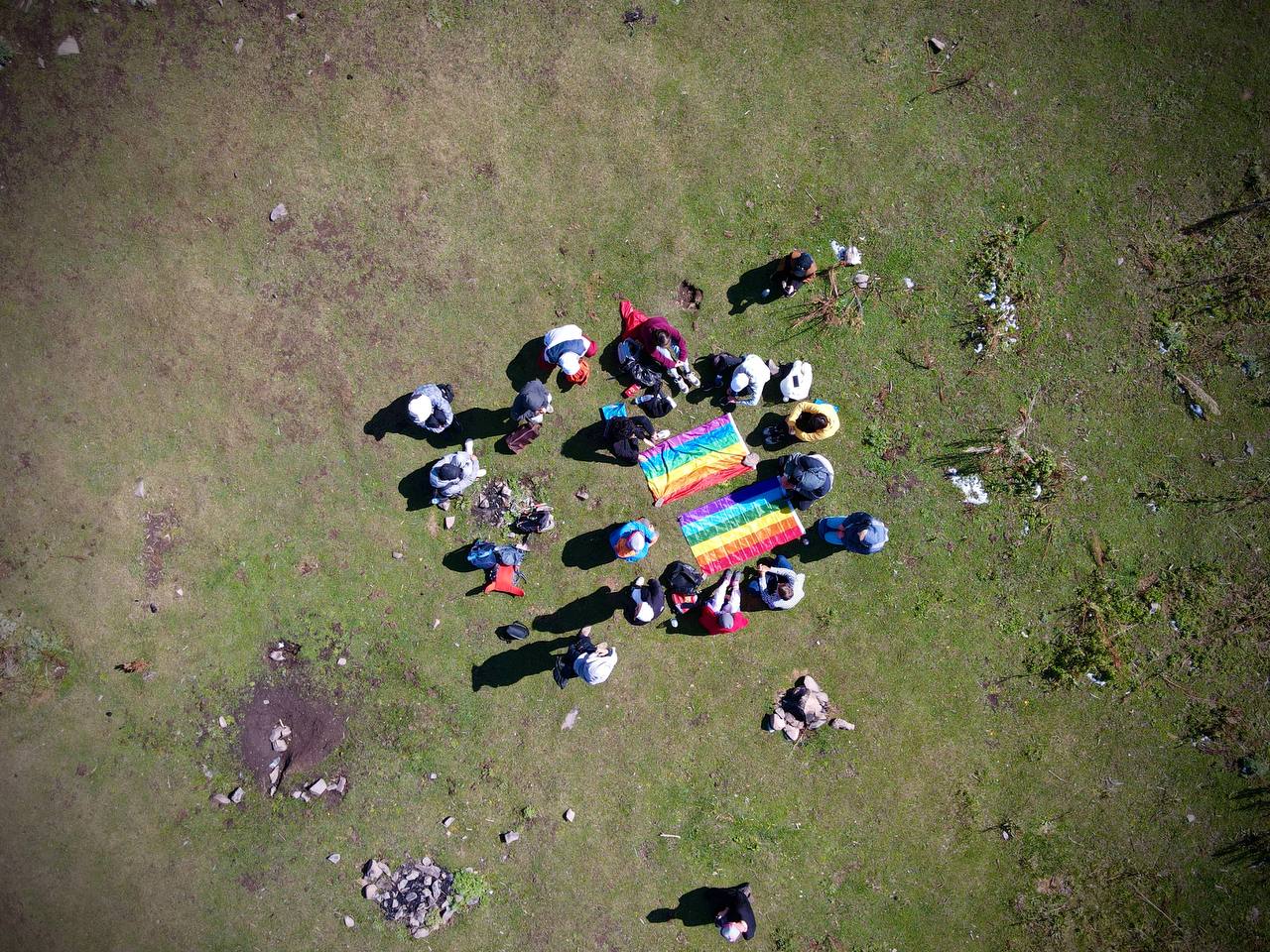
Back then, when I was a full-time queer activist in Kyrgyzstan, most of my days were filled with international and national advocacy work. My focus and mission were clear: to change laws in Kyrgyzstan, to fight against any anti-LGBTIQ+ legislation, and to push for comprehensive anti-discrimination laws.
My organization, Kyrgyz Indigo, our donors, and I poured so much time, energy, and resources into this mission. Yet after years of work, no anti-discrimination law had been introduced. Even worse, under the growing political influence of Russia, two new laws appeared that made advocacy work in Kyrgyzstan almost impossible:
- The “anti-propaganda” law, which bans any information about LGBTIQ+ people being shared with minors; and
- The “foreign agents” law, which puts at risk any work done by NGOs funded by international organizations.
Looking back, I realize there were questions I didn’t ask then—questions I should have. Why were donors so focused on changing laws and policies in a country where there is no real rule of law, where political power overrides legislation, and where foreign powers directly shape the legislative process? Why did we, as LGBTIQ+ activists, spend so much of our energy and resources on advocacy when our most urgent challenges were the violence and hatred fueled by widespread queerphobia? Why did we treat legal change as more important than social change? Maybe because it was “easier” to measure, “easier” to report, “easier” to show results?
After all those years working in advocacy, I came to understand something important: real change in law can only happen after change happens in people’s hearts and minds. Laws come and go—but people and their stories stay. Our focus and resources, I believe, should go toward deep, long-term social transformation, even if it’s harder, slower, and more dangerous than pushing for legal reforms.
We need more openly queer people in sports, arts, science, and culture. Their stories show the richness of our community, challenge prejudice, inspire others, and create lasting shifts in how people see us.
When I look back, I doubt that all my years of advocacy work had as much impact as the single moment I came out publicly during a press conference with Human Rights Watch. That one hour—sharing my story openly—had a deeper effect than thousands of hours spent in meetings and advocacy. I even heard from a young Kyrgyz man living in China’s Xinjiang region who told me he had believed there were no gay Kyrgyz people until he saw my video. That one video, just an hour long, reached someone’s heart in a way years of policy work never could.
I’m not saying we should abandon advocacy. We still need to resist regressive laws, apply international pressure, and push for legislation that protects our rights. But I’ve come to believe that our long-term focus should be on changing people—their hearts, their perceptions, their understanding.
I see hope in the world around us. Social media, Netflix series, even computer games are changing how young people think about queerness. These shifts matter. They’re slow, but they’re real. That’s why we need to invest more in visibility—by supporting people, initiatives, and campaigns that bring LGBTIQ+ stories to life through culture, art, sports, science, and technology.
One of the most powerful ways to bring positive change for LGBTIQ+ communities in Kyrgyzstan—and beyond—is through visibility, especially in spaces like sports. That’s why I started the Pink Summits campaign in 2018. Founded after I faced death threats and homophobic violence, Pink Summits began as a political campaign to advance LGBTIQ+ visibility by ascending all Seven Summits—the highest mountains on each continent—in a queer-led expedition group.
Within the Seven Summits programme, we have two mountains left: Sagarmāthā (Everest) in Asia and Vinson Massif in Antarctica. Since those climbs are very expensive, we have temporarily paused that programme to focus on the Snow Leopard challenge, which involves summiting the highest mountains in Central Asia. If we succeed, we will be the first queer-led expedition in the world to accomplish it.
Pink Summits’ mission is to promote queer visibility through mountain sports. Queer-led expeditions remain our core strategic activity and a powerful tool to challenge stereotypes. We don’t know any other organisation in the world leading and organising such demanding queer expeditions.
The impact of our work is already visible. In Europe, we have built a strong, well-connected queer mountain sports community. In Central Asia, we organize the region’s largest regular pride event, even amid worsening repression under “anti-propaganda” and “foreign agents” laws. A new local Pink Summits nonprofit is currently being registered in Kyrgyzstan, led by local activists.
Recently, Pink Summits launched a project called “Queer Heroes Outdoors,” supported by the European Union and the International Gay and Lesbian Youth Organisation. The project documents the stories of queer people who are building queer visibility through outdoor sports. If you’re a sportsperson with your own story to share, please reach out to us. Together, we can make our voices heard!